
Innovations in Industrial Vacuum Excavation
Industrial vacuum excavation stands at the forefront of modern construction and maintenance practices, offering a transformative approach to underground digging that significantly enhances both safety and efficiency. As industries shift away from conventional excavation techniques, many organizations have embraced equipment such as hydro excavation vacuum systems to minimize infrastructure risks and protect worker well-being.
The adoption of advanced vacuum excavation methods has become increasingly crucial in densely populated urban environments, where the risk of accidentally damaging water, electric, and communications lines remains high. This technology’s precision and non-destructive capabilities are rapidly making it an essential tool for contractors and municipalities seeking to prevent costly outages and ensure minimal disruption during excavation projects.
With innovative features and evolving applications, vacuum excavation is reshaping the standards for safe, efficient, and environmentally conscious excavation across sectors. As the industry matures, both established markets and emerging economies are witnessing a surge in the adoption of this technology, driven by stricter regulations and the growing demand for infrastructure upgrades.
In this rapidly changing landscape, understanding the technological advancements, diverse applications, and market dynamics of vacuum excavation is crucial for decision-makers seeking to remain at the forefront of construction and utility management. By examining the current state and prospects of the market, this article explores why vacuum excavation is poised for sustained growth and continued innovation.
Introduction to Vacuum Excavation
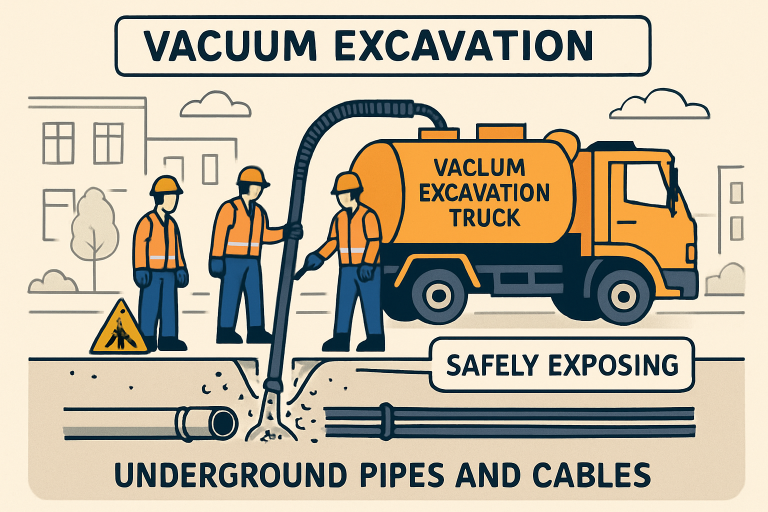
Vacuum excavation, also known as suction excavation, uses high-powered vacuum systems to loosen and remove earth or debris, carefully exposing underground utilities with minimal risk of accidental damage. This non-destructive method outperforms traditional excavation methods, such as backhoes or hand digging, by providing operators with unmatched control over the digging process, especially useful in areas with complex, densely packed underground systems.
Conventional excavation methods pose significant risks, including service interruptions and safety incidents. The rising adoption of vacuum excavation is mainly due to its ability to reduce these risks and help organizations comply with increasingly stringent safety standards. In cities, where every inch of ground is covered with myriad cables and pipes, vacuum systems offer a reliable solution that traditional methods cannot match.
Technological Advancements
The vacuum excavation industry has seen a period of rapid innovation, driven by both regulatory pressures and technological advances. Recent equipment models come with advanced features such as sound-insulating modules to reduce noise, sophisticated filtration systems that meet PM2.5 standards to reduce emissions, and automation to streamline everything from boom movements to debris tank cleaning. These improvements not only enhance the safety and environmental profile of excavation work but also boost efficiency and lower long-term operational costs.
Smart and Sustainable Solutions
One of the most significant technological milestones is the integration of intelligent systems. Automated controls and telematics provide operators with real-time feedback, improving accuracy and reducing the potential for human error. At the same time, the industry is moving toward sustainability, with new electric and hybrid vacuum excavation trailers gaining popularity in response to global efforts to reduce carbon footprints and comply with stricter emission regulations. For an in-depth look at the industry’s response to sustainability, explore the insights provided by For Construction Pros.
Applications Beyond Utility Work
Although initially targeted at utility locators and repair crews, vacuum excavation systems are now used across a growing spectrum of industries. Municipal teams deploy these systems to erect light poles, install signs, jet sewer lines, and repair water infrastructure without unnecessary disturbance. Within industrial facilities, vacuum excavation enables ongoing site maintenance, helping clean tanks, remove spilled material, and clear debris safely while operations continue uninterrupted.
This expansion is primarily attributed to the versatility and efficiency of vacuum systems, which make them an attractive investment for public works agencies, environmental contractors, and facility managers looking to avoid planned downtime while still maintaining the site to high standards. The broadening applications of vacuum excavation underline its importance in modern infrastructure management.
Market Growth and Regional Trends
The global vacuum excavation market is currently in a phase of robust expansion. In 2024, North America led with $1.21 billion in market revenue, buoyed by stringent safety policies, the desire to modernize aging infrastructure, and regional authorities’ readiness to invest in proven safe technologies. The Asia Pacific market is set to follow suit, projected to grow at a compound annual rate of 8.7 percent over the next decade, driven by rapid urbanization and infrastructure development in nations such as China, India, and Australia. Learn more about these market trends through For Construction Pros.
Regional Regulatory Drivers
Strict safety laws in Europe and North America, coupled with increased funding for utility upgrades, continue to drive growth. At the same time, developing economies are quickly adopting vacuum excavation as part of nationwide infrastructure plans, reflecting the industry’s global momentum and broad relevance across market conditions.
Future Prospects
The future of industrial vacuum excavation looks promising, marked by an ongoing evolution in both capabilities and market reach. As Internet of Things (IoT) solutions and telematics become more deeply embedded in excavation fleets, companies will gain unparalleled insight into project data and equipment health, increasing productivity and driving down operating costs. The transition to electric and hybrid systems is also expected to become more mainstream, helping the industry meet strict new environmental standards and sustainability targets.
In summary, vacuum excavation has fundamentally changed how underground work is performed, minimizing risks and improving efficiency across diverse applications. With sustained investment in technology, an expanding market footprint, and a global push towards sustainability, vacuum excavation is positioned to remain a vital part of construction, maintenance, and public works projects for years to come.