

Future Trends in International Real Estate
Key Takeaways
- Global real estate is shaped by technology, demographics, and investment trends.
- VR, AI, and blockchain streamline international transactions and property management.
- Remote work and sustainability are driving new housing preferences and developments.
- Institutional and foreign investors influence prices, supply, and market dynamics.
Introduction
The international real estate landscape is undergoing significant transformations, influenced by technological advancements, demographic shifts, and evolving investment strategies. Understanding these trends is crucial for investors, developers, and stakeholders aiming to navigate the complexities of the global property market. For those interested in exploring luxury properties in Los Cabos, Joe Taylor, a Los Cabos luxury realtor, offers expert guidance and a curated selection of high-end listings. With over two decades of experience building and managing successful businesses, Joe Taylor has become a trusted advisor, helping clients find their dream properties in this vibrant region.
Technological Integration in Real Estate
Technology is revolutionizing real estate operations. The adoption of blockchain enables transparent, secure transactions, while artificial intelligence enhances property valuations and market analysis. For instance, Dubai’s partnership with Crypto.com aims to digitize its real estate sector, integrating blockchain and digital assets into property transactions. This collaboration enables the tokenization of real estate, digital payments, and streamlined processes for buying and selling properties using cryptocurrencies.
Virtual reality (VR) and augmented reality (AR) are also leaving their mark on international real estate. Investors and buyers can now take 3D tours of properties located thousands of miles away, enhancing access for overseas investors and enabling developers to reach a global audience. Smart contracts are automating routine processes such as lease agreements, escrow, and registration, significantly reducing paperwork and transaction friction for cross-border deals.
Data analytics is further empowering market participants by offering precise insights into trends, risks, and returns. Real estate platforms utilize machine learning to match buyers with the most relevant listings, while predictive analytics helps investors identify promising locations and property types even before they become widely popular. Technology platforms are not only simplifying global transactions but also making property management more efficient through remote monitoring, IoT devices, and intelligent maintenance scheduling.
Demographic Shifts and Urbanization
Global demographic changes are reshaping real estate demand. Aging populations in developed economies are increasing the need for age-friendly housing and healthcare-integrated communities. Conversely, younger generations favor urban centers that offer experiential living, leading to a rise in mixed-use developments that combine residential, retail, and entertainment spaces. This trend is evident in cities like Lisbon, Medellín, and Kuala Lumpur, which have experienced significant price appreciation in premium residential segments catering to digital nomads.
Rising mobility is changing the traditional concept of home ownership. The nomadic lifestyle, enabled by remote work, has given rise to flexible lease arrangements, co-living spaces, and properties designed for temporary occupancy. Countries and cities are adapting their visa and residency policies to attract mobile workers and entrepreneurs, further fueling demand for innovative urban and suburban living formats. Increased infrastructure spending aimed at improving connectivity is bolstering the appeal of previously overlooked regions and secondary cities, both for living and investment.
Emerging Investment Hotspots
Investors are increasingly targeting emerging markets that offer favorable conditions. Cities such as Miami, Dubai, and Lisbon are becoming new magnets for the ultra-wealthy, thanks to tax advantages, lifestyle appeal, and favorable residency programs. For example, Miami benefits from Florida’s lack of state income tax and its high homeownership rate, while Dubai offers zero personal income tax and a low corporate tax rate. Lisbon attracts expats with generous tax exemptions on foreign income.
Other regions are also rapidly gaining attention. Southeast Asian and Latin American capitals are emerging as alternative investment meccas, driven by demographic booms, regional trade agreements, and accelerating economic development. Markets like Mexico City, Ho Chi Minh City, and Panama City are seeing a surge in cross-border capital inflows, particularly from investors seeking diversification and higher yields. Government reforms and improving transparency are expected to stimulate further growth, positioning these cities as future global real estate leaders.
Sustainable Development Practices
Sustainability is becoming a cornerstone in real estate development. Developers are incorporating eco-friendly materials and energy-efficient designs to meet regulatory standards and cater to environmentally conscious consumers. The adaptive reuse market has grown to $185 billion annually as investors convert obsolete office and retail spaces into residential, logistics, and mixed-use properties. Circular economy principles are driving material innovation, with cross-laminated timber and low-carbon concrete reducing embodied carbon by up to 60%.
Innovative concepts such as green roofs, solar panels, and biophilic design are appearing in more commercial and residential projects, aligning with stricter environmental, social, and governance (ESG) requirements from regulators and investors. Cities worldwide are incentivizing sustainable construction through tax credits, expedited permit processing, and green certification programs, thus accelerating adoption. Additionally, sustainability certifications like LEED and BREEAM are becoming standard for properties aiming to attract international investors and high-profile tenants.
As climate change increases weather-related risks, developers and investors are reevaluating locations and focusing on resilience. This includes integrating flood protections, improved water management systems, and sustainable landscaping into urban planning and property development. Insurance markets are also adapting, offering new products that reward sustainability and resilience measures with lower premiums.
Impact of Remote Work on Property Demand
The shift towards remote work has altered property demand patterns. There’s a growing preference for residential properties in suburban and secondary cities, as remote workers seek larger living spaces and a better quality of life. This trend has led to increased demand in areas previously considered less desirable, impacting property values and investment strategies. For instance, global remote work adoption has stabilized at 42% of knowledge workers, reducing central business district office occupancy by 28% in major financial centers while driving unprecedented demand for secondary city and suburban properties.
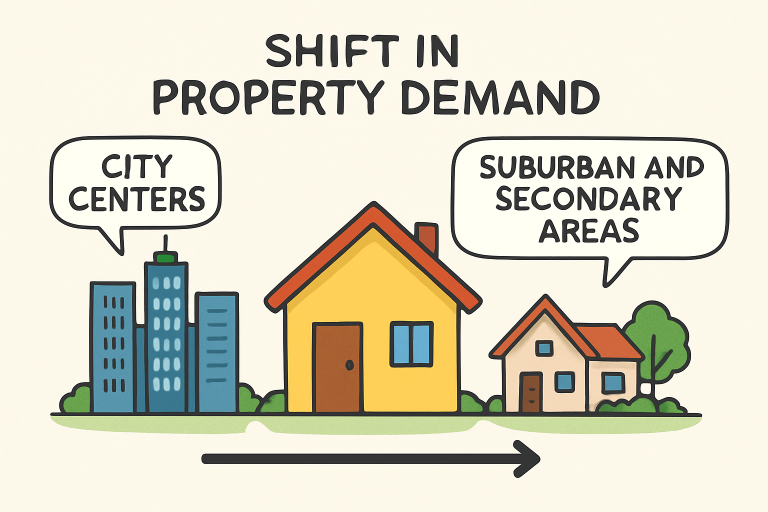
This remote work revolution is also catalyzing the development of new types of work-focused residential communities and flexible office solutions in residential settings. Co-working spaces are being integrated into residential and mixed-use developments, attracting both remote professionals and start-ups seeking collaboration and networking opportunities while maintaining lifestyle flexibility. Suburban and exurban areas are prioritizing infrastructure upgrades, such as high-speed broadband and public transit, to better accommodate the influx of knowledge workers and support a sustainable work-from-anywhere dynamic.
Institutional Investment in Housing Markets
Institutional investors are allocating more capital to residential sectors, leading to the growing institutionalization of housing markets. This trend is expected to result in more countries achieving average annual investments exceeding US$500 million by 2030. The living sector is forecast to remain the largest for investment volumes, with an additional US$1.4 trillion in transactions over the next five years.
The expansion of institutional investors in residential real estate is prompting the development of large-scale rental portfolios, build-to-rent projects, and professionally managed multifamily housing. This trend not only increases the quality and supply of rental stock but can also lead to higher standards for tenant services, digital amenities, and community management. However, growing institutional presence raises questions about affordability and accessibility, prompting ongoing regulatory debates about maintaining a balance between private investment and broad-based housing opportunity.
Final Thoughts
The international real estate market is evolving rapidly, influenced by technological innovations, demographic changes, and shifting investment patterns. Staying informed about these trends is essential for making strategic decisions in this dynamic environment.
Whether you are a private investor, developer, or homeowner, it is clear that adaptability and forward-thinking strategies will be vital for success. Embracing new technologies, prioritizing sustainability, and remaining responsive to demographic and lifestyle changes will shape the prosperous real estate portfolios of the future. As international markets continue to converge, cross-cultural knowledge, global networks, and the ability to react to new regulatory or economic conditions will define long-term market leaders.
- Designing Intuitive Dashboards for Taxi Dispatch Systems
- What Is Included in the UrgentCareKit.com Medical Emergency Kit? Complete Guide for 2026
- Does Hvacinriverview.com Install Heating Systems? A Complete Guide
- What Categories Are Available on Voddler.co.uk?
- What Features Does OneFramework Offer? A Complete Guide for Modern Web Development